Xuan Ji

Research

How planets evolve into habitable worlds.

I study small exoplanets through the coupled dynamics of interiors, atmospheres, and orbits.
I ask how these interactions shape atmospheric retention, climate, and habitability.

Atmospheric Retention

Which planets have atmosphere and why?

The Cosmic Shoreline Informed by Stellar Evolution and XUV-driven Hydrodynamic Escape

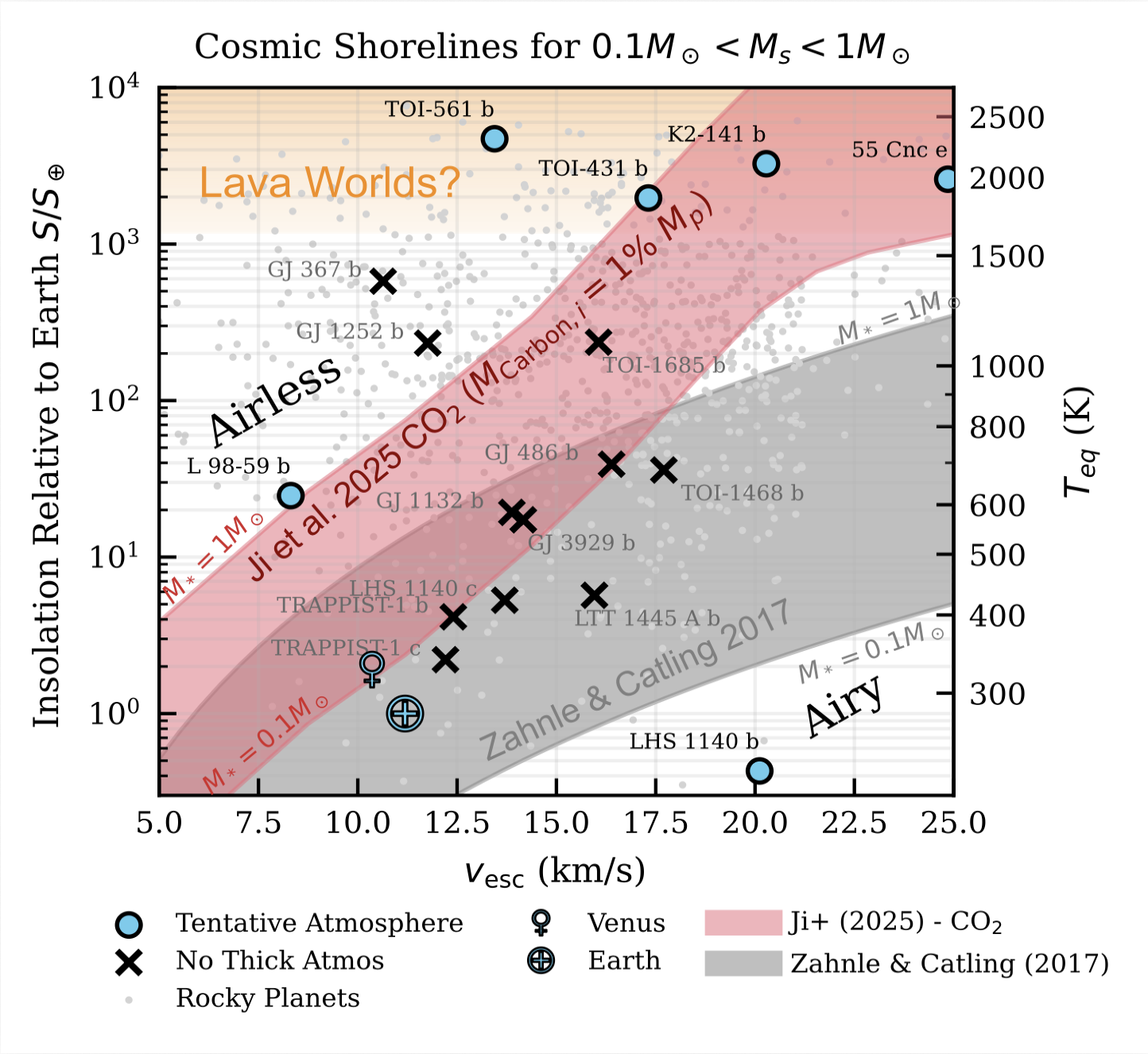
Cosmic shoreline under stellar evolution and hydrodynamic escape

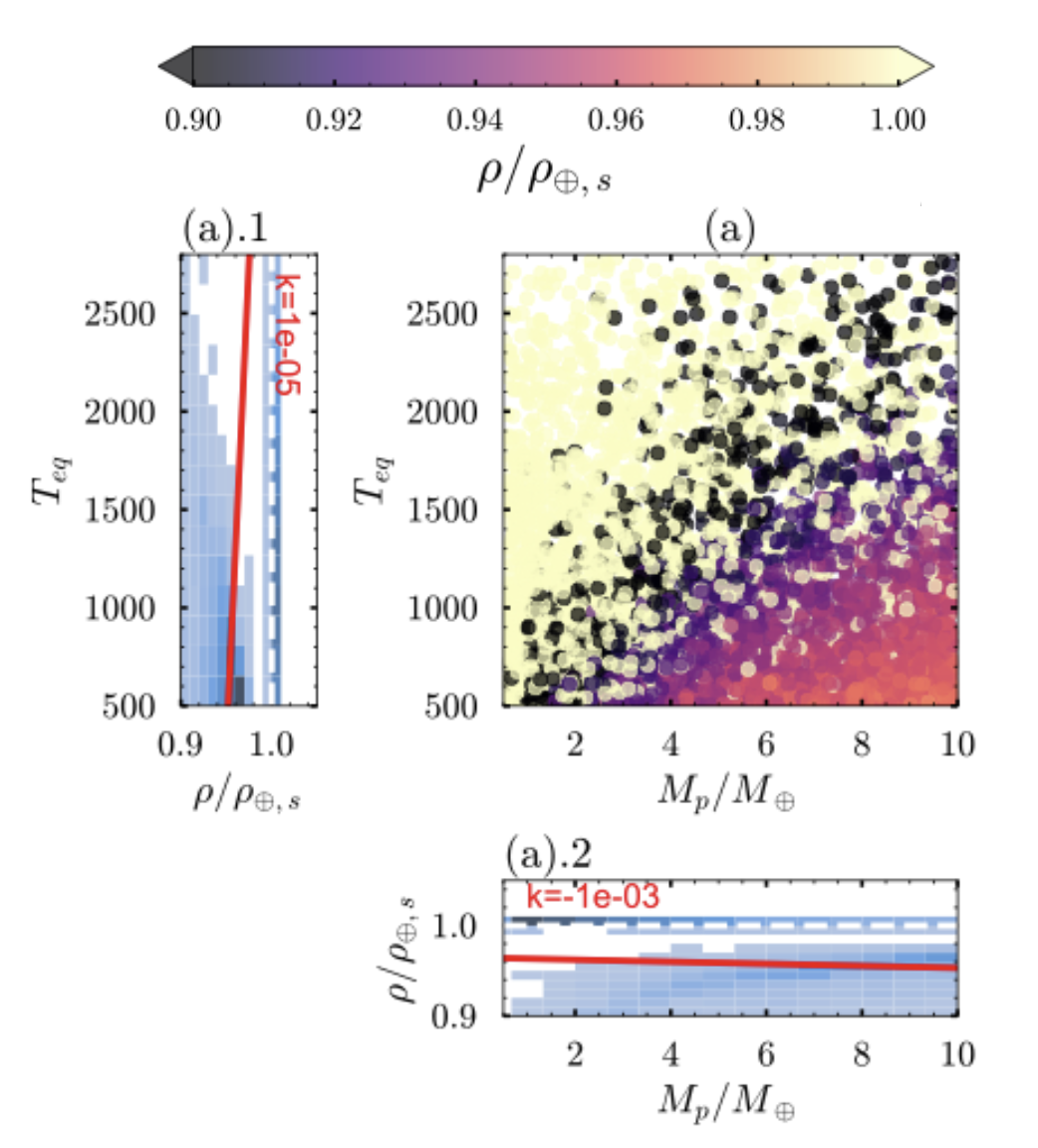
Atmospheric escape responds nonlinearly to XUV flux because of the rich heating and cooling processes involved in the upper atmosphere. Then how does the cosmic shoreline change with more realistic escape physics? Our updated shoreline incorporate:

Our results suggest that more massive rocky planets are more resistant to atmospheric loss than predicted by the traditional cosmic shoreline, with encouraging implications for 55 Cancri e and other super-Earths.

Cosmic shoreline (GitHub)
[Ji et al, 2025, ApJ]

Atmosphere Erosion by Impacts

Placeholder figure for impact erosion model framework

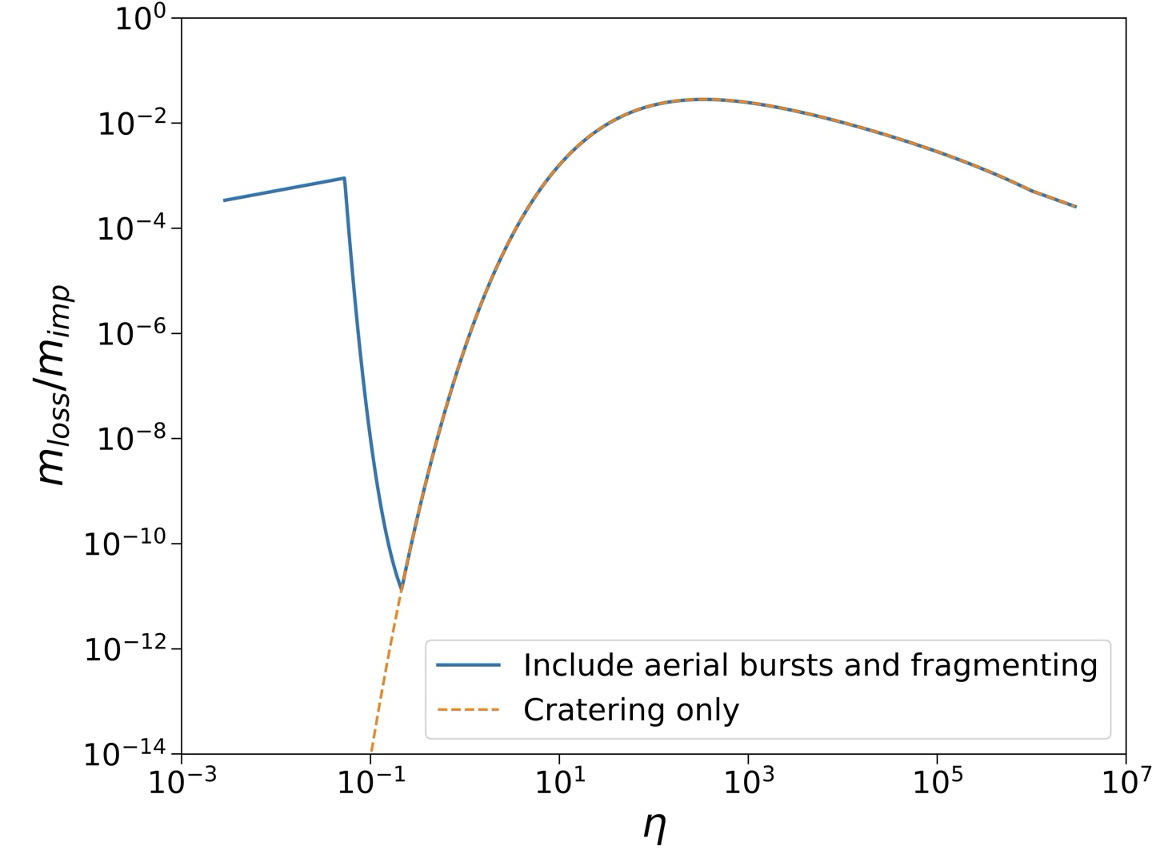
The atmospheric erosion process in this paper includes: (1) cumulative planetesimal impacts over each N-body output interval, and (2) discrete giant impacts. For planetesimals, I sample a size distribution that matches the total delivered mass in each interval, convert to impactor masses, and compute loss per impact with the prescription from Sinclair & Wyatt (2021). For giant impacts, I use a prescription from Kegerreis et al. (2020).

You can use this tool to calculate the atmospheric loss:

[Gu, Peng, Ji, et al, 2024, EPSL]

Climate under Orbital Forcing

How climate evolves with evolving orbits.

Inner Habitable Zone (IHZ) as a Function of Eccentricity

Inner habitable zone as a function of eccentricity

Orbital-Mean Stellar Flux Approximation Holds for Earth-like Planets

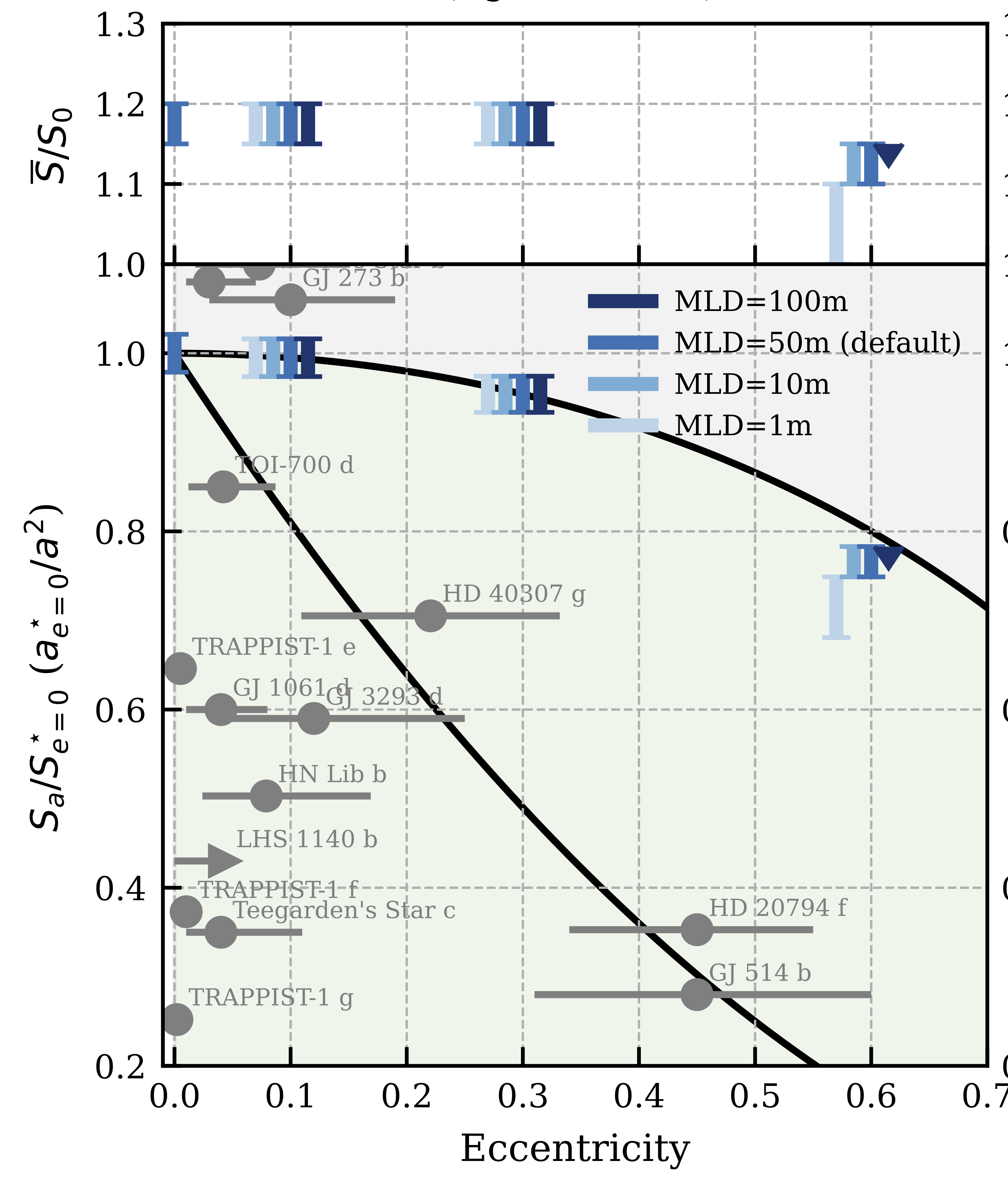
For planets with strong seasonal variations in incoming stellar flux, our scaling analysis shows that, with a 10-m ocean, the surface temperature responds slowly enough that it changes little over an orbit. As a result, the climate is mainly set by the orbit-averaged incoming energy. This gives a simple way to estimate whether the planet stays below the runaway greenhouse limit (the upper solid black line in the left figure):

Sa/S* <(1 - e2)1/2

where Sa is stellar flux at semi-major axis a, S* is the critical stellar flux for a circular orbit.

[Ji et al 2023, ApJL]
3D climate extension of IHZ under high eccentricity

Summer Cloud Loss at High Eccentricity Warms the Planet

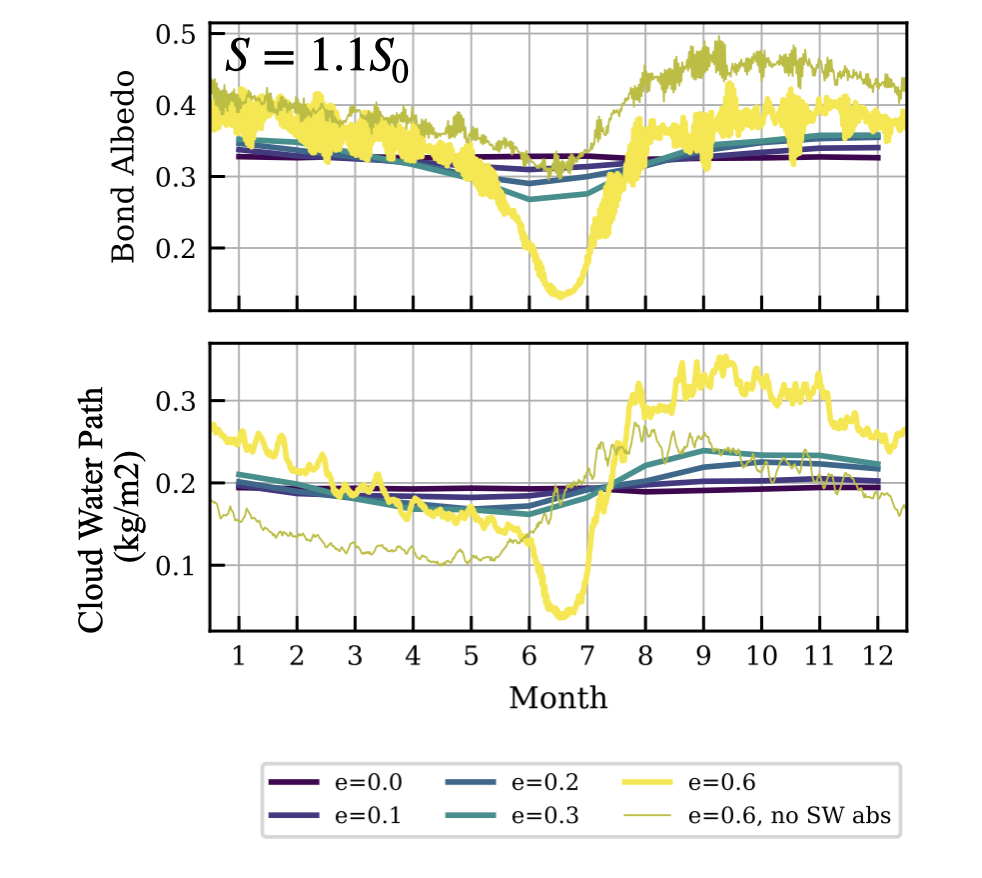
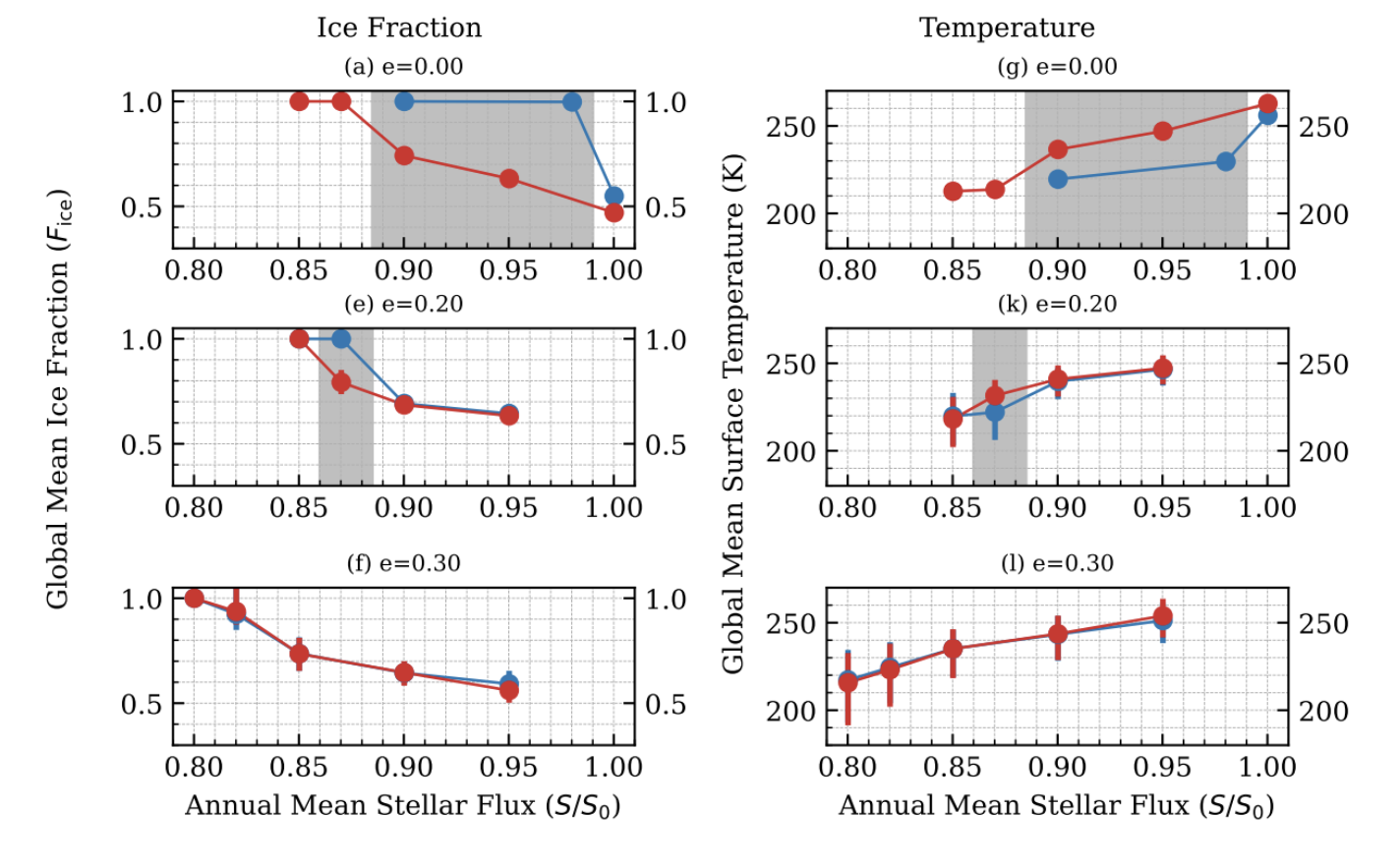
ExoCAM 3D GCM results show that the orbital-mean flux approximation works well up to about e=0.3. At lower stellar flux, some adjustment is needed because sea ice increases the albedo. For the more extreme case of e=0.6 (yellow line), the surface temperature is noticeably higher, which we trace to a lower annual-mean albedo. The reason is the loss of summer cloud cover: strong shortwave absorption heats the atmosphere, shuts down convection, and reduces clouds, allowing the planet to absorb more incoming radiation.

Ji and Abbot (in prep)

Snowball Bistabiity Disappear with e>0.2

snowball

On Earth, Snowball episodes may help with rising oxygen and complex life. We show that for exoplanets on eccentric orbits, the climate can lose the usual back-and-forth between a fully frozen Snowball state and a warmer state with open ocean: once seasonality becomes strong enough, summer melting outpaces winter ice growth, so the Snowball state disappears more easily than we used to think.

[Ji and Abbot, 2025]

Clouds and Seasonality with Varying Rotation Rates

Cloud seasonality under varying rotation rates

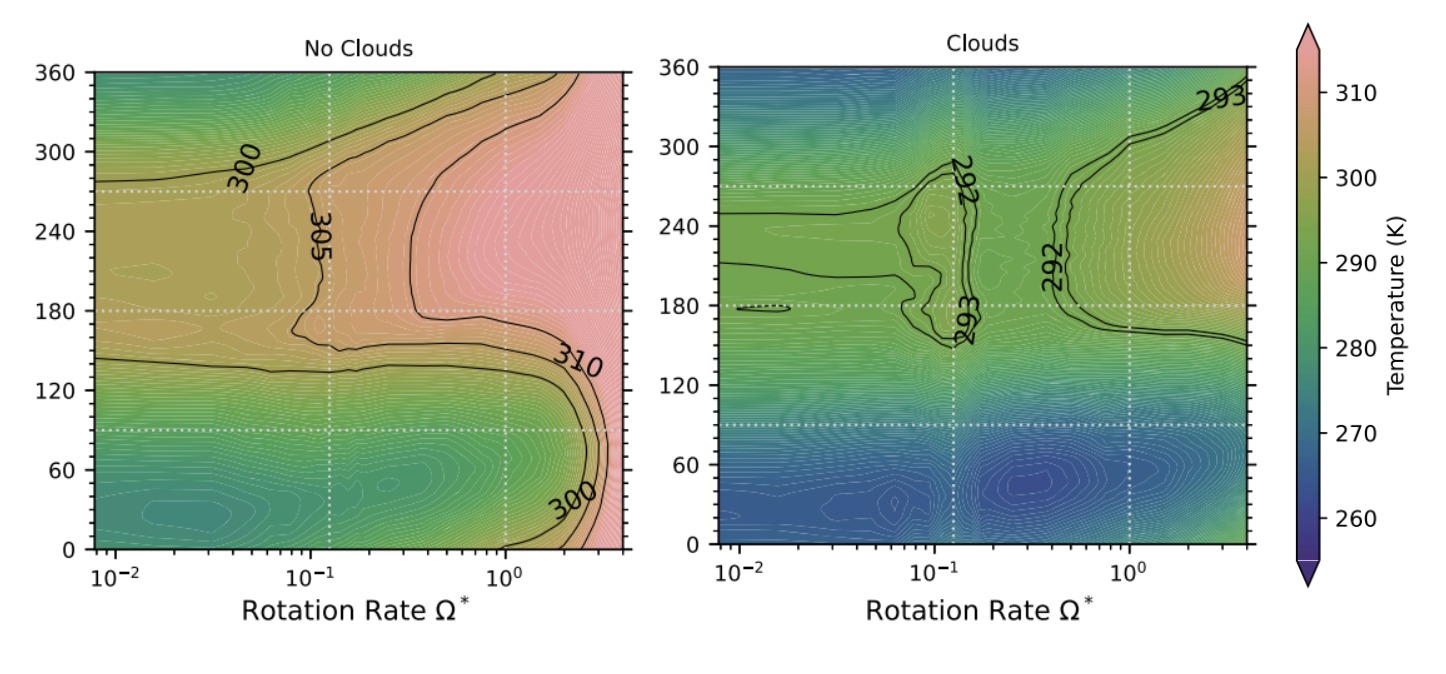
As the rotation rate changes, clouds produce a local minimum in planetary albedo at 1/8 of Earth’s rotation rate. This appears to be a transition point: below it, the planet behaves like an “all tropics” world, with ITCZ clouds migrating nearly to the poles. Because the cloud response is not monotonic, surface temperature and precipitation also peak near 1/8 of Earth’s rotation rate. In addition, the seasonal transition from summer toward winter becomes later at faster rotation, and clouds make this seasonal lag even stronger.

[Williams, Ji, et al, 2024]

Orbital Evolution

How system architecture sets long-term orbital excitation, tidal heating, and interior activity.

Sweeping Secular Resonances in Cold-Jupiter–Super-Earth Systems

SSR

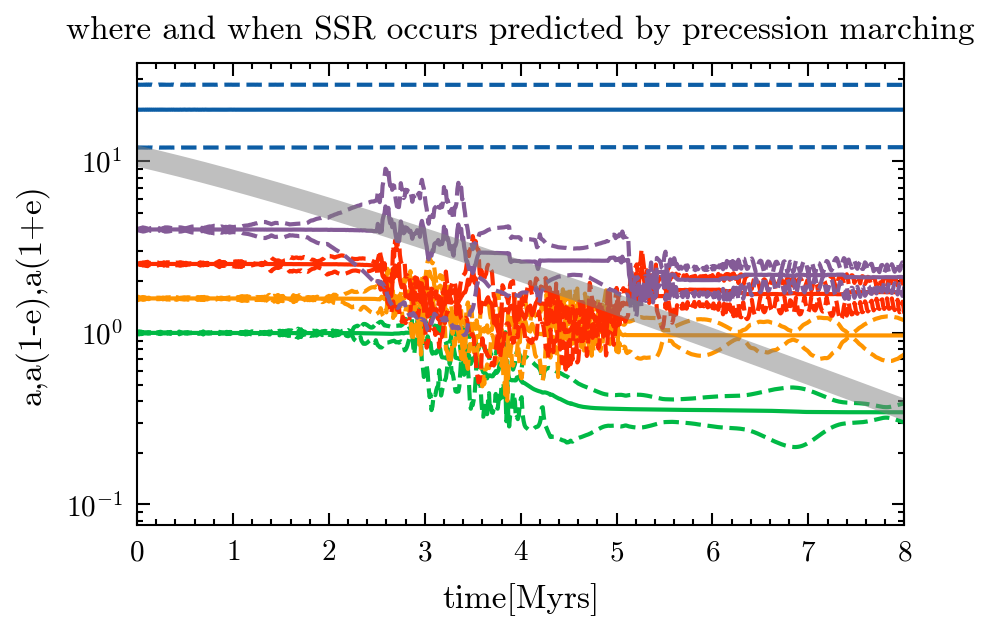
In planetary systems containing both cold Jupiters and super-Earths, with the disk dissipating, sweeping secular resonances (SSR) can excite inner embryos, trigger collisions, and shape rocky-planet assembly. I also built an analytical approximation tool to diagnose where and when SSR occurs.


SSR Analytical Tool (GitHub)
[Ji, Zheng, Lin (in prep)]